
Buyer's guide
How to read a stone, a setting and a price.
Start here
Most first-time buyers worry they need a vocabulary they don't have. You need four decisions, and they come easiest in this order.
- The piece. A ring, earrings, a pendant or a bracelet, and whether you will wear it for every day or for occasions.
- The stone. Its shape, and how large you want it to read.
- The metal. Yellow, white or rose gold, in 14k or 18k.
- The budget. Name a number before you start looking. You will make the first three decisions inside it.
The sections below cover the words you will meet on a product page: the four Cs, shapes, metals and certificates. Read straight through, or jump to what you need.
You can also skip all of it and ask us.
What your stone is
Every stone we set is a laboratory-grown diamond, produced by chemical vapour deposition (CVD).
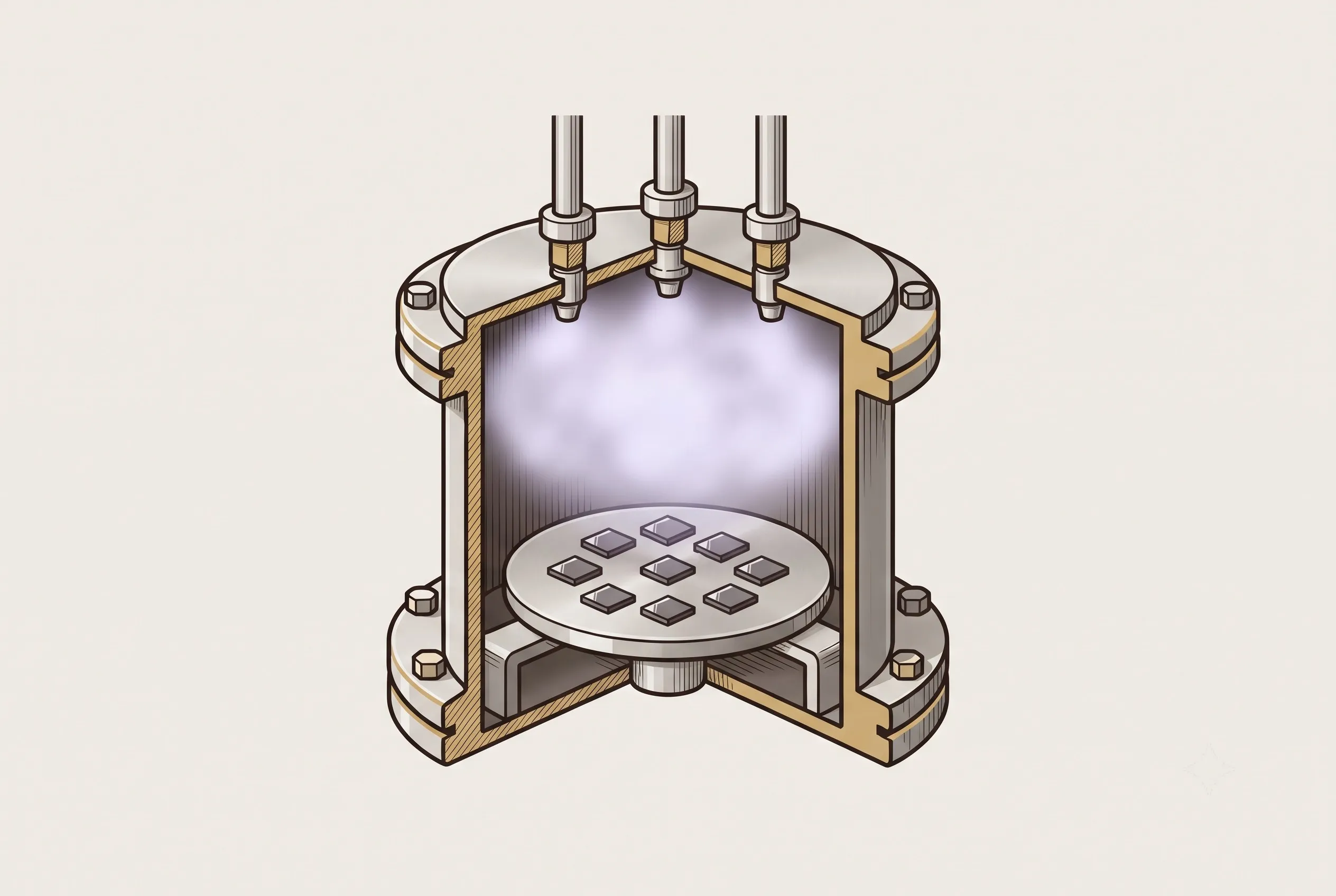
It is the same material as a mined diamond. Same carbon crystal, same hardness (10 on the Mohs scale, the hardest material there is), same fire. A gemmologist holding a loupe cannot tell you which is which. Separating the two takes laboratory equipment built for the job. The difference sits in where the crystal started.
Cubic zirconia and moissanite copy the look using other materials. Ours is the material itself.
How your stone is grown
Our growers seal a wafer-thin seed crystal inside a chamber, fill the chamber with carbon-rich gas, and heat it until the gas turns to plasma. Carbon atoms leave the gas and settle on the seed, one atomic layer at a time. A rough crystal builds up over several weeks. The same cutters who work mined rough then cut and polish it, to the same tolerances.
CVD growth leaves no metallic residue, so these stones carry no magnetism. Stones grown under the older high-pressure method sometimes do. Growth this slow also lands most crystals in the colour range buyers want, which is why a colourless stone here costs a fraction of its mined equivalent.
The four Cs: Cut
Cut is the one C you can see from across a room.
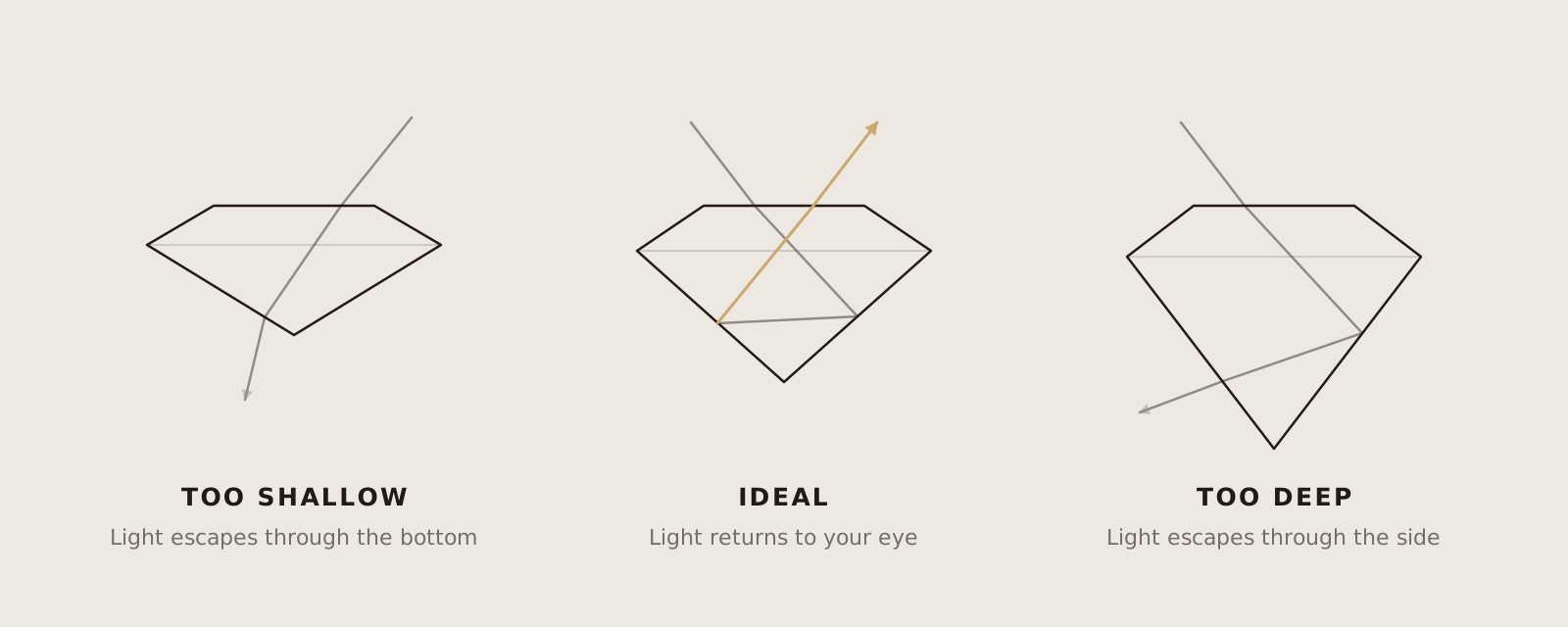
It has nothing to do with the stone's shape. Cut describes how the cutter proportioned, polished and aligned the facets. Get it right and light enters through the top, bounces off the internal walls, and returns to your eye. Get it wrong, too shallow or too deep, and light escapes through the bottom. The stone looks glassy or dark however good its colour and clarity read on paper.
Laboratories grade round stones for cut, from Excellent (some say Ideal) down to Poor. They give fancy shapes no overall cut grade, because nobody has agreed a single set of proportions for an oval or a pear. Those get polish and symmetry grades, and you judge the rest with your eyes.
Worth knowing. On a round stone, hold out for Excellent. Nothing else in the report makes up for a poor cut. On a fancy shape, judge the stone rather than the paperwork. Ask us for a video and watch how it moves.
The four Cs: Colour
Colour grades how little colour a stone holds. The scale starts at D, with no colour at all, and runs through the alphabet to Z, where you can see a warm yellow tint without trying.
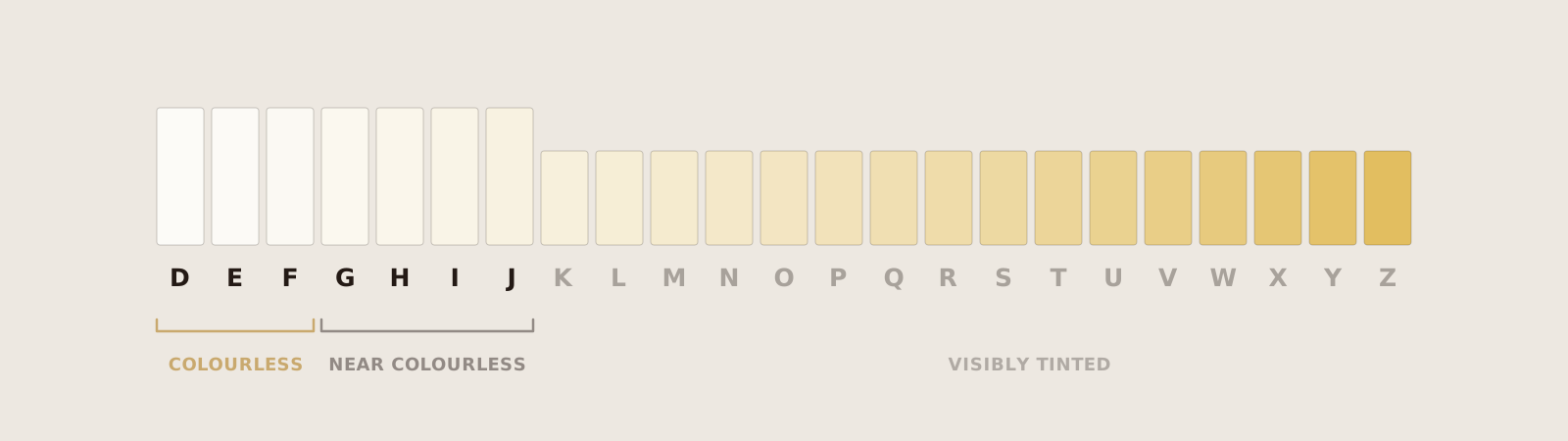
- D, E, F. Colourless. No tint in any light, against any metal.
- G to J. Near colourless. A trace of warmth that grows as you go down.
- K and below. Tinted enough to see.
What we set. Every Myst centre stone is E or F, the top of the scale. We buy nothing further down it, which takes one decision off your hands. It also shows up in the price: a colourless crystal is harder to grow, and it carries a higher rate per carat than a near-colourless one.
That buys you freedom on metal. Jewellers often steer buyers towards warm golds for near-colourless stones, because yellow and rose hide the tint. An E or an F has no tint to hide, so pick the metal you like and ignore the advice.
The four Cs: Clarity
Almost every crystal, grown or mined, forms with tiny marks inside. Clarity grades how many of them a stone holds, how big they are, and how hard you have to look under ten-times magnification.
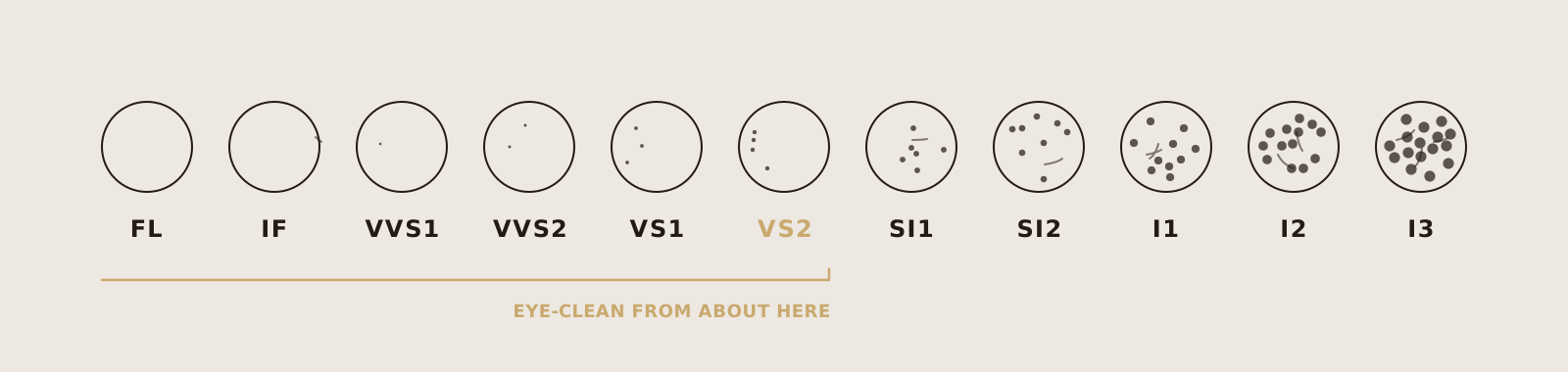
The scale from the top: FL and IF, flawless and internally flawless. Then VVS1 and VVS2, VS1 and VS2, SI1 and SI2, and I1 to I3 at the bottom.
The phrase to hold on to is eye-clean: nothing you can see without magnification, at the distance you would look at your own hand. Near the top of the scale you get that as standard. Further down you stop getting it. An SI stone might be clean, or might carry a mark you cannot unsee once you have found it.
What we set. Every Myst centre stone is VS or VVS. You never have to check for eye-clean or gamble on it, because we buy it that way for every piece in every shape.
This counts most on the step cuts. Emerald and asscher have long open facets that work like windows, and they show marks sooner than a brilliant cut. A mark that hides in a round stone sits in plain view in an emerald. Holding the whole range to VS and above is how we can offer those shapes.
The four Cs: Carat
Carat measures weight. One carat is a fifth of a gram, split into a hundred points, so you will see a 0.75ct stone written as 75 points.
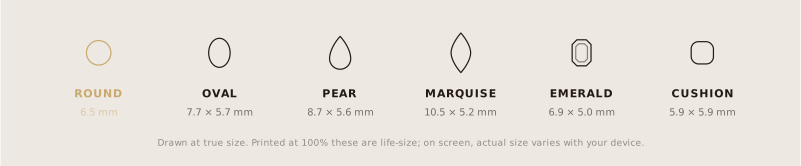
Two numbers, both true. A piece carries the weight of its centre stone, and a total carat weight that adds up every stone set into it. A pair of studs holding two one-carat stones is a two-carat pair. A bracelet set the whole way round reaches six or ten carats in total without holding one large stone. Our pages list each group of stones on its own, so you can see which number you are reading.
Weight sits in different places. A round brilliant at one carat measures about 6.5mm across. An oval or a pear of the same weight runs longer and reads larger on the hand, because more of its weight spreads across the surface. A deep cut buries weight underneath, where it does you no good. Two one-carat stones can look different on the same finger.
Price climbs faster than weight. Growing one clean one-carat crystal is harder than growing two half-carat crystals, so the rate per carat rises with size. It steps up at the full carat and again above it. The centre stone is the biggest line in most quotes, so a small change in its weight moves the price more than you would expect.
What we make. Most Myst pieces sit on a full one-carat centre stone, the size people notice across a table. A few shapes come a little under, where a long outline carries the presence on its own. At the other end, some pieces run to six and ten carats in total. Tell us the size you want to see and we will show you what we have.
Choosing a shape
Shape is the most personal choice here, and the one no guide settles for you. Some notes from handling them.
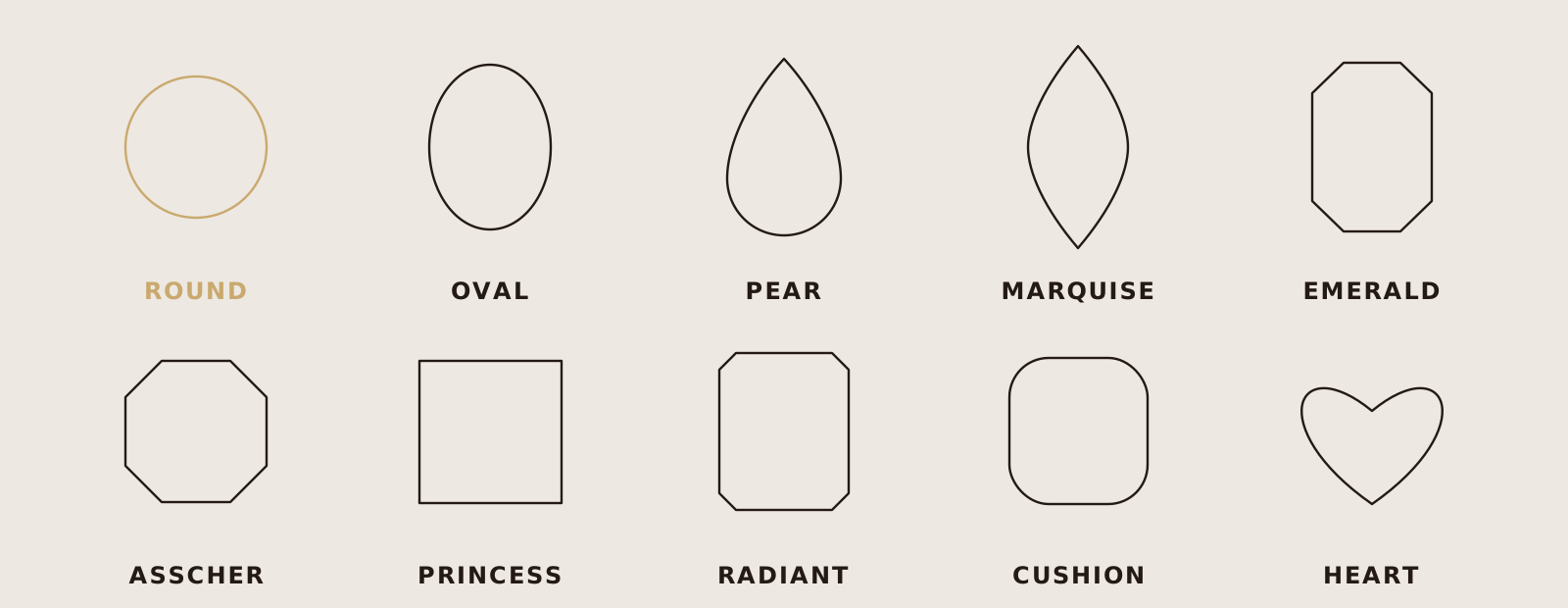
- Round brilliant. Returns more light than any other shape, and forgives the most. Also the dearest per carat, because cutting one wastes more of the rough.
- Oval, pear, marquise. Long outlines, so they read larger than their weight and lengthen the finger. Check that the outline is even and that the bow-tie shadow across the centre stays faint.
- Emerald, asscher. Step cuts. Less scatter, more of a slow glassy flash. Quiet and architectural, and hard on internal marks.
- Princess, radiant, cushion. Square or soft-square, with plenty of fire. Cushion gives the warmest, oldest-looking sparkle of the three.
- Heart. Needs width to read. Give it too little and the outline turns vague.
If you are torn, settle shape in person. We bring loose stones to appointments, so you can hold one against a ring or an ear before you decide.
Choosing your metal
We make every Myst piece in yellow, white or rose gold, at 14k or 18k. Six combinations, one design.
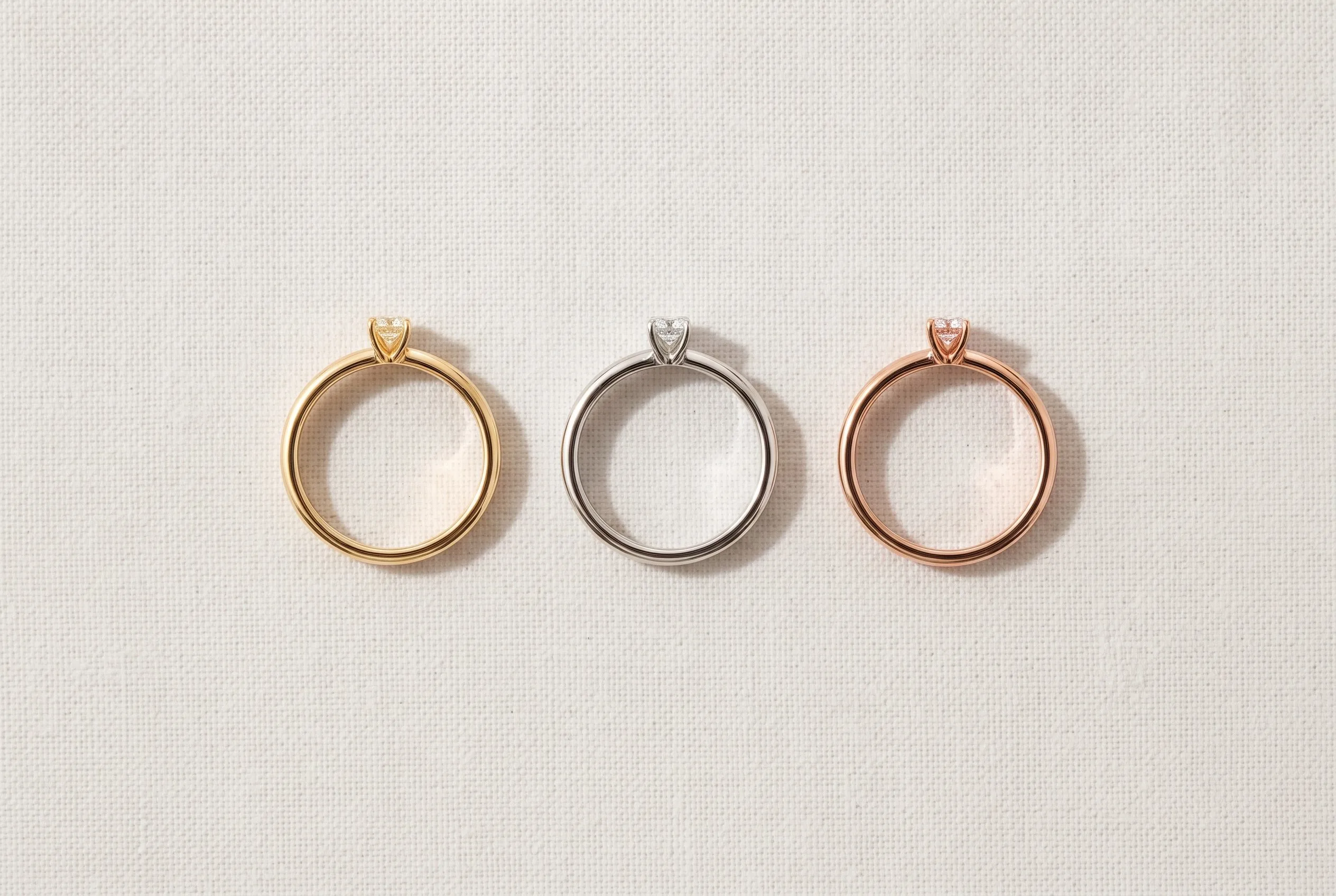
14k or 18k. 18k is 75% pure gold, with a deeper, warmer colour, and it is the traditional choice for fine jewellery. 14k is 58.5% pure, which leaves the alloy harder and more forgiving of knocks. Both hold the same stone in the same setting. You are choosing between colour and hardness.
Yellow, white or rose. Yellow reads warm and classic. White gold gets its bright finish from rhodium plating, which wears with time; a jeweller refreshes it every year or two for a small fee. Rose takes its blush from copper, and that copper makes it the toughest of the three.
About our photographs. We photograph each design once, in one metal, and the caption tells you which. The other five combinations are the same piece in a different gold. One honest photograph serves you better than five approximations. At an appointment you can hold the metals against each other, and against your own skin.
Your certificate
Every centre stone of one carat and above comes with an independent grading report from IGI, a laboratory with no stake in the sale.
The report gives you the four Cs as measured grades instead of adjectives, the stone's dimensions in millimetres, a diagram plotting its internal marks, and a report number. IGI also laser-inscribes that number on the stone's girdle, in letters too small to see without magnification. Match the two and you know the report belongs to your stone.
The report states how the stone was produced: laboratory-grown, by chemical vapour deposition.
We hand you the original with the piece. Keep it with your insurance papers. You will want it if you have the piece valued.
Caring for your piece
A laboratory-grown diamond is the hardest material there is. The gold holding it is soft by comparison, and a film of hand cream dulls a stone faster than anything else. Five habits cover it.
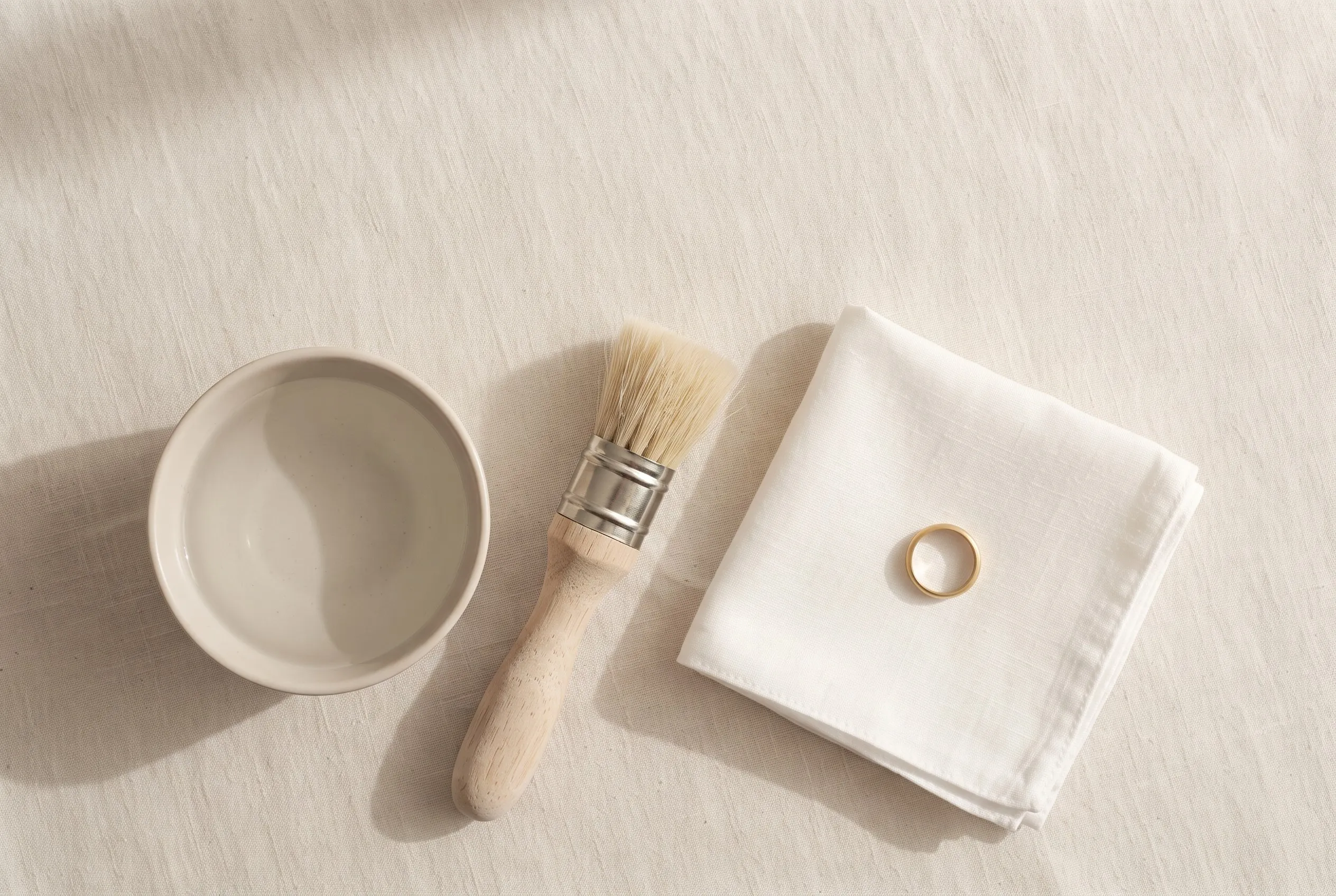
Cleaning. Warm water, a drop of mild dish soap, and a soft toothbrush worked behind the stone, where the film collects. Rinse and pat dry. Once a fortnight is plenty.
Taking it off. Before the gym, before swimming, before you clean with anything chlorinated. Rings come off before bed too.
Storing. Keep each piece apart from the others. Your stone will scratch every other stone in the box, and all the gold in it.
Checking. Have a jeweller look at the setting once a year. Claws loosen without warning you. Most of our earrings use screw-back findings for that reason, so a stud cannot work its way loose over a day.
White gold. Budget for fresh rhodium plating every twelve to eighteen months of regular wear. It is quick and cheap, and we can arrange it.
How buying from Myst works
This site has no cart, by choice. We make every piece to order, and most buyers want to talk to someone before they commit to something made for them.
- Save a wishlist. Save the pieces you like as you browse. The list stays on your own device.
- Send it to us. One tap on WhatsApp, or by email. Tell us the metal and karat you are leaning towards, and anything you want changed.
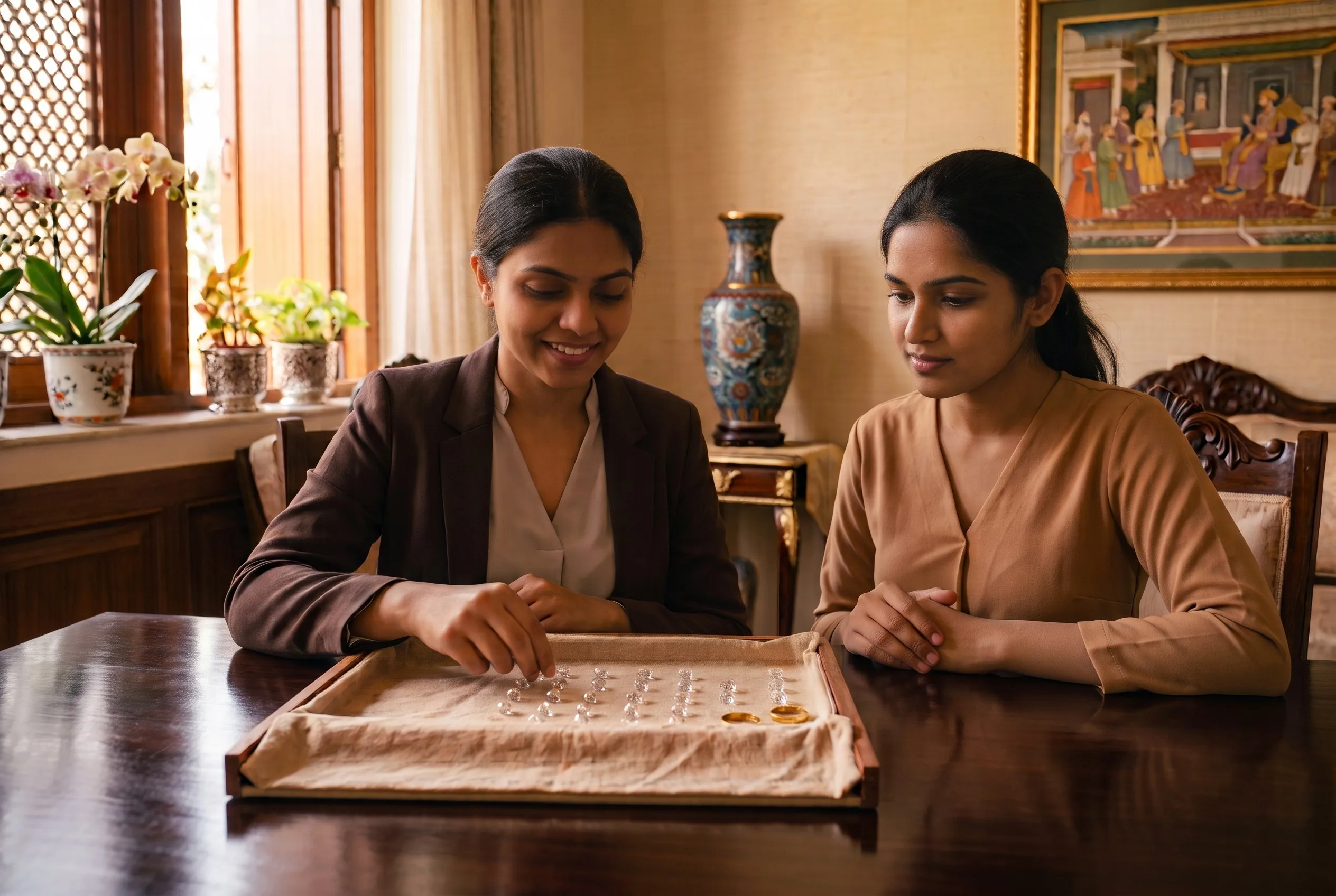
- See it, if you want to. In Mumbai we come to you with loose stones and sample bases, so you can try shapes and sizes on your own hand in your own light. Elsewhere we do the same over video.
- We quote. One price, covering the day's gold rate, the stones and the making.
- We make it. Fifteen to twenty days from confirmation to your door, with the grading report in the box.
If this guide left a question unanswered, send it to us.